Save Our Environment
MALAYSIA
Malaysia's deforestation rate is accelerating faster than that of any other tropical country in the world, according to data from the United Nations. Analysis of figures from the Food and Agriculture Organization of the United Nations (FAO) shows that Malaysia's annual deforestation rate jumped almost 86 percent between the 1990-2000 period and 2000-2005. In total, Malaysia lost an average of 140,200 hectares—0.65 percent of its forest area—per year since 2000. For comparison, the Southeast Asian country lost an average of 78,500 hectares, or 0.35 percent of its forests, annually during the 1990s.
The Malaysian government failed to provide FAO with figures showing the change in extent of primary forests during the period. Primary forests—forests with no visible signs of past or present human activities—are considered the most biologically diverse ecosystems on the planet.
Declining forest cover in Malaysia results primarily from urbanization, agricultural fires, and forest conversion for oil-palm plantations and other forms of agriculture. Logging, which is generally excluded in deforestation figures from FAO, is responsible for widespread forest degradation in the country, and green groups have blamed local timber companies for failing to practice sustainable forest management. In late 2005—despite photographic evidence suggesting otherwise—the Samling Group denied claims from NGOs accusing the timber giant of recklessly harvesting timber in one of its Sarawak concessions on the island of Borneo.
Forest cover has fallen dramatically in Malaysia since the 1970s. While FAO says that forests still cover more than 60 percent of the country, only 11.6 percent of these forests are considered pristine.
Logging
During the 1980s, rampant logging in the Bornean states of Sabah and Sarawak allowed Malaysia to temporarily outpace Indonesia and become the world's largest exporter of tropical wood.
On paper, Malaysia has probably one of the best rainforest protection policies in developing Asia, but in practice logging still carries on as it always has. The majority of Malaysia's remaining forests are managed for timber production, and each state is empowered to formulate forest policy independently. During the past two decades, sustainable forest management has been non-existent. While Malaysia has the policy framework for sustainable forest management in the form of the National Forestry Act of 1984, it has failed to enforce the legislation.
Peninsular Malaysia's primary forests are mostly gone, though some magnificent forest still exists in Taman Negara, a national park. Scientists believe that at 130 million years old, the rainforests of Taman Negara are the oldest in the world.
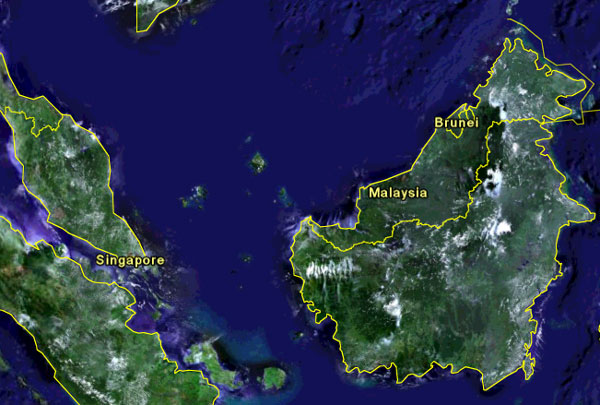
Most of Malaysia's remaining primary forest exists on the island of Borneo in the states of Sabah and Sarawak, but the majority of the forest area in Malaysian Borneo—especially the lowlands—has been selectively logged, resulting in reduced biodiversity. Loggers are now operating in more marginal areas on rugged mountain slopes, which increases the risk of soil erosion and mudslides. In Sabah (Northeastern Borneo), cutting has slowed over the years after a period of rapid deforestation. Timber production appears to have shifted to Sarawak (Northwestern Borneo), where about half the forest cover is slated for logging. About 8 percent of the land area in Sarawak is designated as reserves, but these protected areas are generally understaffed and threatened by illegal logging and encroachment by colonists who settle along logging roads.
In the 1980s, through roadblocks and sabotage of logging equipment, the indigenous Penan of Borneo attempted to stop logging in their traditional homeland. Their protests were ruthlessly and savagely put down by the Malaysian government, which blocked media access to the region until the unrest was settled and the forest dwellers cleared. The attacks on the Penan brought international attention to the logging of Borneo's forests but appear to have had relatively little long-term impact, since logging increased dramatically in the following years.
Mining
Decades of mining in peninsular Malaysia have left a heavy mark on the environment. Deforestation, pollution of rivers, and siltation have resulted in agricultural losses, and road projects have opened new areas to colonization.
Cronyism
Despite the government's pro-environment overtones, the heavy-handed Malaysian government tends to side with development more than conservation. As of 2004, no court had ever ruled favorably in a major case on behalf of the native forest peoples displaced by rainforest destruction. In the 1990s, the government overturned a High Court decision that would have prevented Bakun dam, a huge hydroelectric project that would flood 170,000 acres (69,000 hectares) of forest. The $2-billion-dollar project has since been plagued with cost overruns and delays. It now appears that the dam—scheduled for completion in 2003—will only be expected to begin generating electricity in late 2009. Further, the local Sarawak market has no need for the power, and undersea transmission lines that would have connected the dam to peninsular Malaysia will not even be laid. Some local commentators say the only purpose behind the project was to benefit Sarawak politicians and their cronies.
Cronyism extends into other industries as well, including palm oil. Malaysia is currently the world's largest producer of palm oil, and many of the largest producers have strong political ties. Promoted by incentives which give plantation owners a 100 percent tax exemption for 10 years, thousands of hectares of forest have been cleared for palm oil and other types of plantations. While plantations on cleared and degraded forest lands are ecologically and economically beneficial, clearing natural forest for plantations results in increased erosion and biodiversity loss.
Transmigration
Like Indonesia, the Malaysian government sponsored transmigration programs to open up rainforest for cash crop production. Between 1956 and the 1980s, Malaysia converted more than 15,000 square kilometers of forest for resettlement programs.
Fires
Periodic fires, usually coinciding with the el Niño events, burn thousands of hectares across Malaysia, especially on the island of Borneo. The haze from these fires and the fires in Kalimantan (Indonesia) cause serious pollution and health problems in Malaysia.
Back in the 1990s, the Malaysian government reacted to fires by ordering media blackouts to avoid spooking tourists and inciting panic over the health impact. Today this has changed as the government increasingly blames Indonesia for failing to control wildfires.
Biodiversity
Malaysia is home to some 15,500 species of higher plants, 746 birds, 300 mammals, 379 reptiles, 198 amphibians, and 368 species of fish.
On paper, more than 30% of Malaysia's land area is under some form of protection, although some "conservation" areas are specifically managed for logging.
Pictures from Malaysia
Recent articles | Malaysia news updates | XML
Girls Scouts censors Facebook page after coming under criticism for product linked to rainforest loss
(05/04/2011) Girls Scouts USA has censored its Facebook page after receiving comments criticizing the organization, according to Rainforest Action Network (RAN). RAN along with Change.org and two Girl Scout activists, Rhiannon Tomtishen and Madison Vorva, declared today a social media day of activism against the Girl Scouts for using palm oil in their popular cookies. The oil has been linked to rainforest destruction in Indonesia and Malaysia.
Palm oil lobby attacks World Bank's new social and environmental safeguards
(04/18/2011) Groups funded by the palm oil industry lashed out at the World Bank's new framework to resume lending to the palm oil sector.
Malaysian palm oil giant in fight with forest people gets rebuke from RSPO
(04/06/2011) A Malaysian palm oil company facing criticism for a land use dispute with forest people in Borneo has been suspended from the Roundtable on Sustainable Palm Oil (RSPO), an eco-certification body.
Japan disaster to put logging pressure on rainforests in Indonesia, Malaysia
(04/05/2011) The tragic earthquake and tsunami that hit Japan last month is likely to boost wood imports into the recovering nation, adding increased pressure on the already imperiled rainforests of Southeast Asia. Even before the disaster, Japan was the world's number one importer of wood chips and plywood and the second largest importer of logs. Japan usually imports plywood from China, Malaysia, and Indonesia, however the forests of Southeast Asia are facing tremendous loss due to logging and clearing for industrial-scale agriculture, such as palm oil.
Indigenous community takes court ruling into own hands and seizes oil palm plantation
(03/31/2011) A community in Malaysian Borneo seized an oil palm plantation belonging to the IOI Group after the palm oil giant failed to respect the terms of a court ruling that the plantation was established on native customary land, reports the Rainforest Action Network (RAN).
Fiji eyes investment from Malaysian palm oil industry
(03/30/2011) Officials in Fiji met with investors from the Malaysian palm oil industry this week to discuss the potential development of oil palm plantations in the Pacific island nation, reports FijiVillage.com.
Google Earth reveals stark contrast between Sarawak's damaged forests and those in neighboring Borneo states
(03/28/2011) Images from Google Earth show a sharp contract between forest cover in Sarawak, a state in Malaysian Borneo, and the neighboring countries of Brunei and Indonesia at a time when Sarawak's Chief Minister Pehin Sri Abdul Taib Mahmud is claiming that 70 percent of Sarawak's forest cover is intact.
Sawarak chief minister claims 70% of forest intact, invites indepedent observers to verify
(03/28/2011) Embattled Chief Minister of Sarawak Pehin Sri Abdul Taib Mahmud challenged independent observers to demonstrate that anything less than 70 percent of the Malaysian state's forest cover is "intact" rain forest, according to an interview with Sarawak Reports, a pro-Taib web site created earlier this month.
 Pet trade, palm oil, and poaching: the challenges of saving the 'forgotten bear'
(03/20/2011) Siew Te Wong is one of the few scientists who study sun bears (Ursus malayanus). He spoke with Laurel Neme on her "The WildLife" radio show and podcast about the interesting biological characteristics of this rare Southeast Asian bear, threats to the species and what is being done to help them. Sun bears are the smallest of the eight bear species. They’re about half the size of a North American black bear and typically sport a tan crescent on their chests. Similar to the "moon bear," or Asian black bear, the sun bear’s name comes from this marking, which looks like a rising or setting sun.
 Goodbye national parks: when 'eternal' protected areas come under attack
(03/17/2011) One of the major tenets behind the creation of a national park, or other protected area, is that it will not fade, but remain in essence beyond the pressures of human society, enjoyed by current generations while being preserved for future ones. The protected area is a gift, in a way, handed from one wise generation to the next. However, in the real world, dominated by short-term thinking, government protected areas are not 'inalienable', as Abraham Lincoln dubbed one of the first; but face being shrunk, losing legal protection, or in some cases abolished altogether. A first of its kind study, published in Conservation Letters, recorded 89 instances in 27 countries of protected areas being downsized (shrunk), downgraded (decrease in legal protections), and degazetted (abolished) since 1900. Referred to by the authors as PADDD (protected areas downgraded, downsized, or degazetted), despite its large impact on conservation efforts the trend has been little studied.
Coalition calls on Europe to label palm oil on food products
(03/15/2011) Do you have the right to know whether the chocolate bar you're munching on includes palm oil, which is blamed for vast deforestation in Malaysia and Indonesia? How about that frozen pizza? According to a coalition of environmental and conservation groups it's time for food manufacturers to add palm oil to the label in Europe, instead of currently being listed as simply, and erroneously (palm kernels are fruits), 'vegetable oil'.
Japan's earthquake disaster may boost rainforest logging in Borneo
(03/13/2011) Malaysian loggers say Japan's recovery from last week's devastating earthquake and tsunami will boost demand for rainforest timber, reports the Borneo Post.
 Report: corruption in Sarawak led to widespread deforestation, violations of indigenous rights
(03/10/2011) At the end of this month it will be 30 years since Abdul Taib Mahmud came to power in the Malaysian state of Sarawak. Environmentalists are using the occasion, along with new revelations, to highlight corruption and nepotism they say have characterized his regime. Chief Minister Taib and his decades-long administration are no strangers to such allegations, but a new report from the indigenous-rights group Bruno Manser Fund (BMF)—amid criticism from independent media sources, such as Sarawak Report and Radio Free Sarawak—are adding fuel to the fire. Most recently, the report describes in great detail how the tropical timber trade in Sarawak has undercut indigenous groups while toppling some of the world's greatest rainforests, all at the expense of the Sarawak people.
 First large-scale map of oil palm plantations reveals big environmental toll
(03/07/2011) Expansion of industrial oil palm plantations across Malaysia and Indonesia have laid waste to vast areas of forest and peatlands, exacerbating greenhouse gas emissions and putting biodiversity at risk, reports a new satellite-based analysis that maps mature oil palm estates across Peninsular Malaysia, Borneo, and Sumatra.
Photo: slaughtered great hornbill by soldiers raises ire [warning: graphic image]
(02/27/2011) A photo of an illegally killed great pied hornbill (Buceros bicornis) by what appears to be Malaysian soldiers has angered environmentalists in Malaysia, according to the New Strait Times. The photo was posted on Facebook last year.
 Photo gallery: Borneo paradise saved from beachside coal plant
(02/22/2011) Last week the Malaysian government announced it had canceled a plan to build a coal-fired plant in the state of Sabah. The coal plant would have rested on a beach overlooking the Coral Triangle, one of the ocean's most biodiverse ecosystems, and 20 kilometers from Tabin Wildlife Reserve, a rainforest park home to endangered orangutans, Sumatran rhinos, Bornean elephants, and thousands of other species. The cancellation followed a long campaign by a group of environmental and human right organizations dubbed Green SURF (Sabah Unite to Re-power the Future), which argued that the coal plant would have imperiled ecosystems, ended artisanal fishing in the area, hurt tourism, and tarnished Sabah's reputation as a clean-green state.
Sarawak government mocks its indigenous people
(02/20/2011) The Sarawak government mocked the plight of its rainforest people in a press release issued earlier this month, says a rights' group.
Environmentalists and locals win fight against coal plant in Borneo
(02/16/2011) Environmentalists, scientists, and locals have won the battle against a controversial coal plant in the Malaysian state of Sabah in northern Borneo. The State and Federal government announced today that they would "pursue other alternative sources of energy, namely gas, to meet Sabah's power supply needs." Proposed for an undeveloped beach on the north-eastern coast of Borneo, critics said the coal plant would have threatened the Coral Triangle, one of the world's most biodiverse marine ecosystems, and Tabin Wildlife Reserve, home to Critically Endangered Sumatran rhinos and Bornean orangutans. Local fishermen feared that discharges from the plant would have imperiled their livelihood.
 Sarawak's last nomad: indigenous leader and activist, Along Sega, dies
(02/03/2011) Along Sega never knew exactly how old he was, but when he passed away yesterday in a hospital far from the forest where he born, he was likely in his 70s. Leader among the once-nomadic hunter and gatherer Penan people of Borneo and mentor to Swiss activist, Bruno Manser, Along Sega will be remembered for his work to save the Penan's forest—and their lifestyle and culture—from logging companies, supported by the Sarawak government and provided muscle by the state police.
 From Cambodia to California: the world's top 10 most threatened forests
(02/02/2011) Growing populations, expanding agriculture, commodities such as palm oil and paper, logging, urban sprawl, mining, and other human impacts have pushed many of the world's great forests to the brink. Yet scientists, environmentalists, and even some policymakers increasingly warn that forests are worth more standing than felled. They argue that by safeguarding vulnerable biodiversity, sequestering carbon, controlling erosion, and providing fresh water, forests provide services to humanity, not to mention the unquantifiable importance of having wild places in an increasingly human-modified world. Still, the decline of the world's forests continues: the FAO estimating that around 10 million hectares of tropical forest are lost every year. Of course, some of these forests are more imperiled than others, and a new analysis by Conservation International (CI) has catalogued the world's 10 most threatened forests.
 Malaysian palm oil producers destroying Borneo peat forests faster than ever before
(02/01/2011) Peatlands and rainforests in Malaysia's Sarawak state on the island of Borneo are being rapidly destroyed for oil palm plantations, according to new studies by environmental group Wetlands International and remote sensing institute Sarvision. The analysis shows that more than one third (353,000 hectares or 872,000 acres) of Sarawak's peatswamp forests and ten percent of the state's rainforests were cleared between 2005 and 2010. About 65 percent of the area was converted for oil palm, which is replacing logging as timber stocks have been exhausted by unsustainable harvesting practices.
 Camera trap photos: big mammals survive in fragmented forest in Borneo
(01/30/2011) Camera trap photos taken in the fragmented forest along the Kinabatangan River in Borneo have revealed a number of key mammal species surviving despite forest loss mostly due to expanding palm oil plantations. The photos are apart of a recent program to monitor carnivores along the Kinabatangan River in the Malaysian state of Sabah by the Danau Girang Field Center (DGFC), the NGO HUTAN, Oxford University's Wildlife Conservation Research Unit (WildCRU), and the Sabah Wildlife Department.
Scientists to document impact of converting rainforest into oil palm plantations
(01/30/2011) Scientists have partnered with one of the world's largest palm oil producers to measure the impact of converting tropical forest into an oil palm plantation, reports Nature News.
 Greening the world with palm oil?
(01/26/2011) The commercial shows a typical office setting. A worker sits drearily at a desk, shredding papers and watching minutes tick by on the clock. When his break comes, he takes out a Nestle KitKat bar. As he tears into the package, the viewer, but not the office worker, notices something is amiss—what should be chocolate has been replaced by the dark hairy finger of an orangutan. With the jarring crunch of teeth breaking through bone, the worker bites into the “bar." Drops of blood fall on the keyboard and run down his face. His officemates stare, horrified. The advertisement cuts to a solitary tree standing amid a deforested landscape. A chainsaw whines. The message: Palm oil—an ingredient in many Nestle products—is killing orangutans by destroying their habitat, the rainforests of Borneo and Sumatra.
World's weirdest aphrodisiac: elephant-digested durian fruit
(01/20/2011) The spiky, odorous, weighty, and almost impenetrable durian fruit is considered by some to be a fine delicacy, but others a putrid horror. Its taste has been described between a delicious custard and old gym socks. Still, even durian lovers may be uncomfortable with the idea of eating the fruit after it has been consumed and expelled by a wild Asian elephant. But according to the New Straits Times recently wealthy businessmen are willing to pay over $300 for a sample of elephant-ingested durian, which they believe acts as an aphrodisiac.
Suggested reading - Books
Unless otherwise specified, this article was written by Rhett A. Butler [Bibliographic citation for this page]
Other resources
Contact me if you have suggestions on other rainforest-related environmental sites and resources for this country.

| Malaysia Forest Figures Forest Cover Total forest area: 20,890,000 ha % of land area: 63.6% Primary forest cover: 3,820,000 ha % of land area: 11.6% % total forest area: 18.3% Deforestation Rates, 2000-2005 Annual change in forest cover: -140,200 ha Annual deforestation rate: -0.7% Change in defor. rate since '90s: 85.1% Total forest loss since 1990: -1,486,000 ha Total forest loss since 1990:-6.6% Primary or "Old-growth" forests Annual loss of primary forests: n/a Annual deforestation rate: n/a Change in deforestation rate since '90s: n/a Primary forest loss since 1990: n/a Primary forest loss since 1990:0.0% Forest Classification Public: 93.4% Private: 6.6% Other: 0% Use Production: 56.6% Protection: 18.2% Conservation: 5.4% Social services: n/a Multiple purpose: 19.8% None or unknown: n/a Forest Area Breakdown Total area: 20,890,000 ha Primary: 3,820,000 ha Modified natural: n/a Semi-natural: 15,497,000 ha Production plantation: 1,573,000 ha Production plantation: n/a Plantations Plantations, 2005: 1,573,000 ha % of total forest cover: 7.5% Annual change rate (00-05): -17,200,000 ha Carbon storage Above-ground biomass: 5,661 M t Below-ground biomass: 1,359 M t Area annually affected by Fire: 1,000 ha Insects: n/a Diseases: n/a Number of tree species in IUCN red list Number of native tree species: 2,650 Critically endangered: 50 Endangered: 99 Vulnerable: 403 Wood removal 2005 Industrial roundwood: 20,600,000 m3 o.b. Wood fuel: 3,414,000 m3 o.b. Value of forest products, 2005 Industrial roundwood: $2,081,000,000 Wood fuel: $69,000,000 Non-wood forest products (NWFPs): n/a Total Value: $2,150,000,000 More forest statistics for Malaysia |
Declining forest cover in Malaysia results primarily from urbanization, agricultural fires, and forest conversion for oil-palm plantations and other forms of agriculture. Logging, which is generally excluded in deforestation figures from FAO, is responsible for widespread forest degradation in the country, and green groups have blamed local timber companies for failing to practice sustainable forest management. In late 2005—despite photographic evidence suggesting otherwise—the Samling Group denied claims from NGOs accusing the timber giant of recklessly harvesting timber in one of its Sarawak concessions on the island of Borneo.
Forest cover has fallen dramatically in Malaysia since the 1970s. While FAO says that forests still cover more than 60 percent of the country, only 11.6 percent of these forests are considered pristine.
Logging
During the 1980s, rampant logging in the Bornean states of Sabah and Sarawak allowed Malaysia to temporarily outpace Indonesia and become the world's largest exporter of tropical wood.
On paper, Malaysia has probably one of the best rainforest protection policies in developing Asia, but in practice logging still carries on as it always has. The majority of Malaysia's remaining forests are managed for timber production, and each state is empowered to formulate forest policy independently. During the past two decades, sustainable forest management has been non-existent. While Malaysia has the policy framework for sustainable forest management in the form of the National Forestry Act of 1984, it has failed to enforce the legislation.
Peninsular Malaysia's primary forests are mostly gone, though some magnificent forest still exists in Taman Negara, a national park. Scientists believe that at 130 million years old, the rainforests of Taman Negara are the oldest in the world.
Most of Malaysia's remaining primary forest exists on the island of Borneo in the states of Sabah and Sarawak, but the majority of the forest area in Malaysian Borneo—especially the lowlands—has been selectively logged, resulting in reduced biodiversity. Loggers are now operating in more marginal areas on rugged mountain slopes, which increases the risk of soil erosion and mudslides. In Sabah (Northeastern Borneo), cutting has slowed over the years after a period of rapid deforestation. Timber production appears to have shifted to Sarawak (Northwestern Borneo), where about half the forest cover is slated for logging. About 8 percent of the land area in Sarawak is designated as reserves, but these protected areas are generally understaffed and threatened by illegal logging and encroachment by colonists who settle along logging roads.
In the 1980s, through roadblocks and sabotage of logging equipment, the indigenous Penan of Borneo attempted to stop logging in their traditional homeland. Their protests were ruthlessly and savagely put down by the Malaysian government, which blocked media access to the region until the unrest was settled and the forest dwellers cleared. The attacks on the Penan brought international attention to the logging of Borneo's forests but appear to have had relatively little long-term impact, since logging increased dramatically in the following years.
Mining
Decades of mining in peninsular Malaysia have left a heavy mark on the environment. Deforestation, pollution of rivers, and siltation have resulted in agricultural losses, and road projects have opened new areas to colonization.
Cronyism
Despite the government's pro-environment overtones, the heavy-handed Malaysian government tends to side with development more than conservation. As of 2004, no court had ever ruled favorably in a major case on behalf of the native forest peoples displaced by rainforest destruction. In the 1990s, the government overturned a High Court decision that would have prevented Bakun dam, a huge hydroelectric project that would flood 170,000 acres (69,000 hectares) of forest. The $2-billion-dollar project has since been plagued with cost overruns and delays. It now appears that the dam—scheduled for completion in 2003—will only be expected to begin generating electricity in late 2009. Further, the local Sarawak market has no need for the power, and undersea transmission lines that would have connected the dam to peninsular Malaysia will not even be laid. Some local commentators say the only purpose behind the project was to benefit Sarawak politicians and their cronies.
Cronyism extends into other industries as well, including palm oil. Malaysia is currently the world's largest producer of palm oil, and many of the largest producers have strong political ties. Promoted by incentives which give plantation owners a 100 percent tax exemption for 10 years, thousands of hectares of forest have been cleared for palm oil and other types of plantations. While plantations on cleared and degraded forest lands are ecologically and economically beneficial, clearing natural forest for plantations results in increased erosion and biodiversity loss.
Transmigration
Like Indonesia, the Malaysian government sponsored transmigration programs to open up rainforest for cash crop production. Between 1956 and the 1980s, Malaysia converted more than 15,000 square kilometers of forest for resettlement programs.
Fires
Periodic fires, usually coinciding with the el Niño events, burn thousands of hectares across Malaysia, especially on the island of Borneo. The haze from these fires and the fires in Kalimantan (Indonesia) cause serious pollution and health problems in Malaysia.
Back in the 1990s, the Malaysian government reacted to fires by ordering media blackouts to avoid spooking tourists and inciting panic over the health impact. Today this has changed as the government increasingly blames Indonesia for failing to control wildfires.
Biodiversity
Malaysia is home to some 15,500 species of higher plants, 746 birds, 300 mammals, 379 reptiles, 198 amphibians, and 368 species of fish.
On paper, more than 30% of Malaysia's land area is under some form of protection, although some "conservation" areas are specifically managed for logging.
Pictures from Malaysia
Recent articles | Malaysia news updates | XML
Girls Scouts censors Facebook page after coming under criticism for product linked to rainforest loss
(05/04/2011) Girls Scouts USA has censored its Facebook page after receiving comments criticizing the organization, according to Rainforest Action Network (RAN). RAN along with Change.org and two Girl Scout activists, Rhiannon Tomtishen and Madison Vorva, declared today a social media day of activism against the Girl Scouts for using palm oil in their popular cookies. The oil has been linked to rainforest destruction in Indonesia and Malaysia.
Palm oil lobby attacks World Bank's new social and environmental safeguards
(04/18/2011) Groups funded by the palm oil industry lashed out at the World Bank's new framework to resume lending to the palm oil sector.
Malaysian palm oil giant in fight with forest people gets rebuke from RSPO
(04/06/2011) A Malaysian palm oil company facing criticism for a land use dispute with forest people in Borneo has been suspended from the Roundtable on Sustainable Palm Oil (RSPO), an eco-certification body.
Japan disaster to put logging pressure on rainforests in Indonesia, Malaysia
(04/05/2011) The tragic earthquake and tsunami that hit Japan last month is likely to boost wood imports into the recovering nation, adding increased pressure on the already imperiled rainforests of Southeast Asia. Even before the disaster, Japan was the world's number one importer of wood chips and plywood and the second largest importer of logs. Japan usually imports plywood from China, Malaysia, and Indonesia, however the forests of Southeast Asia are facing tremendous loss due to logging and clearing for industrial-scale agriculture, such as palm oil.
Indigenous community takes court ruling into own hands and seizes oil palm plantation
(03/31/2011) A community in Malaysian Borneo seized an oil palm plantation belonging to the IOI Group after the palm oil giant failed to respect the terms of a court ruling that the plantation was established on native customary land, reports the Rainforest Action Network (RAN).
Fiji eyes investment from Malaysian palm oil industry
(03/30/2011) Officials in Fiji met with investors from the Malaysian palm oil industry this week to discuss the potential development of oil palm plantations in the Pacific island nation, reports FijiVillage.com.
Google Earth reveals stark contrast between Sarawak's damaged forests and those in neighboring Borneo states
(03/28/2011) Images from Google Earth show a sharp contract between forest cover in Sarawak, a state in Malaysian Borneo, and the neighboring countries of Brunei and Indonesia at a time when Sarawak's Chief Minister Pehin Sri Abdul Taib Mahmud is claiming that 70 percent of Sarawak's forest cover is intact.
Sawarak chief minister claims 70% of forest intact, invites indepedent observers to verify
(03/28/2011) Embattled Chief Minister of Sarawak Pehin Sri Abdul Taib Mahmud challenged independent observers to demonstrate that anything less than 70 percent of the Malaysian state's forest cover is "intact" rain forest, according to an interview with Sarawak Reports, a pro-Taib web site created earlier this month.
Pet trade, palm oil, and poaching: the challenges of saving the 'forgotten bear' (03/20/2011) Siew Te Wong is one of the few scientists who study sun bears (Ursus malayanus). He spoke with Laurel Neme on her "The WildLife" radio show and podcast about the interesting biological characteristics of this rare Southeast Asian bear, threats to the species and what is being done to help them. Sun bears are the smallest of the eight bear species. They’re about half the size of a North American black bear and typically sport a tan crescent on their chests. Similar to the "moon bear," or Asian black bear, the sun bear’s name comes from this marking, which looks like a rising or setting sun.
Goodbye national parks: when 'eternal' protected areas come under attack(03/17/2011) One of the major tenets behind the creation of a national park, or other protected area, is that it will not fade, but remain in essence beyond the pressures of human society, enjoyed by current generations while being preserved for future ones. The protected area is a gift, in a way, handed from one wise generation to the next. However, in the real world, dominated by short-term thinking, government protected areas are not 'inalienable', as Abraham Lincoln dubbed one of the first; but face being shrunk, losing legal protection, or in some cases abolished altogether. A first of its kind study, published in Conservation Letters, recorded 89 instances in 27 countries of protected areas being downsized (shrunk), downgraded (decrease in legal protections), and degazetted (abolished) since 1900. Referred to by the authors as PADDD (protected areas downgraded, downsized, or degazetted), despite its large impact on conservation efforts the trend has been little studied.
Coalition calls on Europe to label palm oil on food products
(03/15/2011) Do you have the right to know whether the chocolate bar you're munching on includes palm oil, which is blamed for vast deforestation in Malaysia and Indonesia? How about that frozen pizza? According to a coalition of environmental and conservation groups it's time for food manufacturers to add palm oil to the label in Europe, instead of currently being listed as simply, and erroneously (palm kernels are fruits), 'vegetable oil'.
Japan's earthquake disaster may boost rainforest logging in Borneo
(03/13/2011) Malaysian loggers say Japan's recovery from last week's devastating earthquake and tsunami will boost demand for rainforest timber, reports the Borneo Post.
Report: corruption in Sarawak led to widespread deforestation, violations of indigenous rights(03/10/2011) At the end of this month it will be 30 years since Abdul Taib Mahmud came to power in the Malaysian state of Sarawak. Environmentalists are using the occasion, along with new revelations, to highlight corruption and nepotism they say have characterized his regime. Chief Minister Taib and his decades-long administration are no strangers to such allegations, but a new report from the indigenous-rights group Bruno Manser Fund (BMF)—amid criticism from independent media sources, such as Sarawak Report and Radio Free Sarawak—are adding fuel to the fire. Most recently, the report describes in great detail how the tropical timber trade in Sarawak has undercut indigenous groups while toppling some of the world's greatest rainforests, all at the expense of the Sarawak people.
First large-scale map of oil palm plantations reveals big environmental toll(03/07/2011) Expansion of industrial oil palm plantations across Malaysia and Indonesia have laid waste to vast areas of forest and peatlands, exacerbating greenhouse gas emissions and putting biodiversity at risk, reports a new satellite-based analysis that maps mature oil palm estates across Peninsular Malaysia, Borneo, and Sumatra.
Photo: slaughtered great hornbill by soldiers raises ire [warning: graphic image]
(02/27/2011) A photo of an illegally killed great pied hornbill (Buceros bicornis) by what appears to be Malaysian soldiers has angered environmentalists in Malaysia, according to the New Strait Times. The photo was posted on Facebook last year.
Photo gallery: Borneo paradise saved from beachside coal plant(02/22/2011) Last week the Malaysian government announced it had canceled a plan to build a coal-fired plant in the state of Sabah. The coal plant would have rested on a beach overlooking the Coral Triangle, one of the ocean's most biodiverse ecosystems, and 20 kilometers from Tabin Wildlife Reserve, a rainforest park home to endangered orangutans, Sumatran rhinos, Bornean elephants, and thousands of other species. The cancellation followed a long campaign by a group of environmental and human right organizations dubbed Green SURF (Sabah Unite to Re-power the Future), which argued that the coal plant would have imperiled ecosystems, ended artisanal fishing in the area, hurt tourism, and tarnished Sabah's reputation as a clean-green state.
Sarawak government mocks its indigenous people
(02/20/2011) The Sarawak government mocked the plight of its rainforest people in a press release issued earlier this month, says a rights' group.
Environmentalists and locals win fight against coal plant in Borneo
(02/16/2011) Environmentalists, scientists, and locals have won the battle against a controversial coal plant in the Malaysian state of Sabah in northern Borneo. The State and Federal government announced today that they would "pursue other alternative sources of energy, namely gas, to meet Sabah's power supply needs." Proposed for an undeveloped beach on the north-eastern coast of Borneo, critics said the coal plant would have threatened the Coral Triangle, one of the world's most biodiverse marine ecosystems, and Tabin Wildlife Reserve, home to Critically Endangered Sumatran rhinos and Bornean orangutans. Local fishermen feared that discharges from the plant would have imperiled their livelihood.
Sarawak's last nomad: indigenous leader and activist, Along Sega, dies(02/03/2011) Along Sega never knew exactly how old he was, but when he passed away yesterday in a hospital far from the forest where he born, he was likely in his 70s. Leader among the once-nomadic hunter and gatherer Penan people of Borneo and mentor to Swiss activist, Bruno Manser, Along Sega will be remembered for his work to save the Penan's forest—and their lifestyle and culture—from logging companies, supported by the Sarawak government and provided muscle by the state police.
From Cambodia to California: the world's top 10 most threatened forests(02/02/2011) Growing populations, expanding agriculture, commodities such as palm oil and paper, logging, urban sprawl, mining, and other human impacts have pushed many of the world's great forests to the brink. Yet scientists, environmentalists, and even some policymakers increasingly warn that forests are worth more standing than felled. They argue that by safeguarding vulnerable biodiversity, sequestering carbon, controlling erosion, and providing fresh water, forests provide services to humanity, not to mention the unquantifiable importance of having wild places in an increasingly human-modified world. Still, the decline of the world's forests continues: the FAO estimating that around 10 million hectares of tropical forest are lost every year. Of course, some of these forests are more imperiled than others, and a new analysis by Conservation International (CI) has catalogued the world's 10 most threatened forests.
Malaysian palm oil producers destroying Borneo peat forests faster than ever before(02/01/2011) Peatlands and rainforests in Malaysia's Sarawak state on the island of Borneo are being rapidly destroyed for oil palm plantations, according to new studies by environmental group Wetlands International and remote sensing institute Sarvision. The analysis shows that more than one third (353,000 hectares or 872,000 acres) of Sarawak's peatswamp forests and ten percent of the state's rainforests were cleared between 2005 and 2010. About 65 percent of the area was converted for oil palm, which is replacing logging as timber stocks have been exhausted by unsustainable harvesting practices.
Camera trap photos: big mammals survive in fragmented forest in Borneo(01/30/2011) Camera trap photos taken in the fragmented forest along the Kinabatangan River in Borneo have revealed a number of key mammal species surviving despite forest loss mostly due to expanding palm oil plantations. The photos are apart of a recent program to monitor carnivores along the Kinabatangan River in the Malaysian state of Sabah by the Danau Girang Field Center (DGFC), the NGO HUTAN, Oxford University's Wildlife Conservation Research Unit (WildCRU), and the Sabah Wildlife Department.
Scientists to document impact of converting rainforest into oil palm plantations
(01/30/2011) Scientists have partnered with one of the world's largest palm oil producers to measure the impact of converting tropical forest into an oil palm plantation, reports Nature News.
Greening the world with palm oil?(01/26/2011) The commercial shows a typical office setting. A worker sits drearily at a desk, shredding papers and watching minutes tick by on the clock. When his break comes, he takes out a Nestle KitKat bar. As he tears into the package, the viewer, but not the office worker, notices something is amiss—what should be chocolate has been replaced by the dark hairy finger of an orangutan. With the jarring crunch of teeth breaking through bone, the worker bites into the “bar." Drops of blood fall on the keyboard and run down his face. His officemates stare, horrified. The advertisement cuts to a solitary tree standing amid a deforested landscape. A chainsaw whines. The message: Palm oil—an ingredient in many Nestle products—is killing orangutans by destroying their habitat, the rainforests of Borneo and Sumatra.
World's weirdest aphrodisiac: elephant-digested durian fruit
(01/20/2011) The spiky, odorous, weighty, and almost impenetrable durian fruit is considered by some to be a fine delicacy, but others a putrid horror. Its taste has been described between a delicious custard and old gym socks. Still, even durian lovers may be uncomfortable with the idea of eating the fruit after it has been consumed and expelled by a wild Asian elephant. But according to the New Straits Times recently wealthy businessmen are willing to pay over $300 for a sample of elephant-ingested durian, which they believe acts as an aphrodisiac.
Suggested reading - Books
- Shadows in the Forest: Japan and the Politics of Timber in Southeast Asia
- Lonely Planet Malaysia, Singapore & Brunei
- Insight Guide Malaysia
Unless otherwise specified, this article was written by Rhett A. Butler [Bibliographic citation for this page]
Other resources
Contact me if you have suggestions on other rainforest-related environmental sites and resources for this country.